Category Archives: General Information
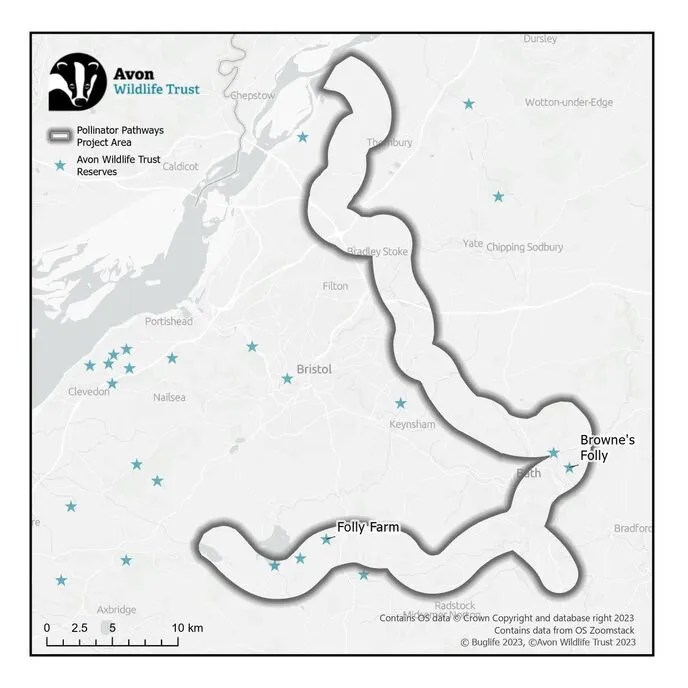
Leap Valley is Part of this Pollinator Pathway Project
What is a pollinator pathway and why is it important?
Habitat fragmentation is one of the biggest threats facing wildlife in the UK. Lots of species will require different habitats depending on the time of year and their life stage. So, being able to move between habitats to find different food sources is vital. Many crops rely on pollination by solitary bees, bumblebees, wasps, hoverflies, butterflies, moths and beetles. In fact, insect pollination is worth an estimated £690 million to food production in the UK. However, in the last 20 years we’ve seen a 60% decrease in the number of flying insects in the UK, with habitat loss and fragmentation being a major contributing factor.
Pollinator Pathways will connect different habitats and allow wildlife to traverse the landscape and access different habitats and by doing so increase the abundance of our struggling pollinator species. Reversing the decline of pollinators in Avon Pollinator Pathways is an innovative two-year project to create and improve pollen-rich habitats and provide a more positive future for pollinators.
By improving the connectivity of pollinator habitats, the project aims to increase the abundance and diversity of pollinators and the availability of well-managed habitats. This will be essential to building resilience for pollinator species as our climate changes.
The Leap Valley Pollinator Project
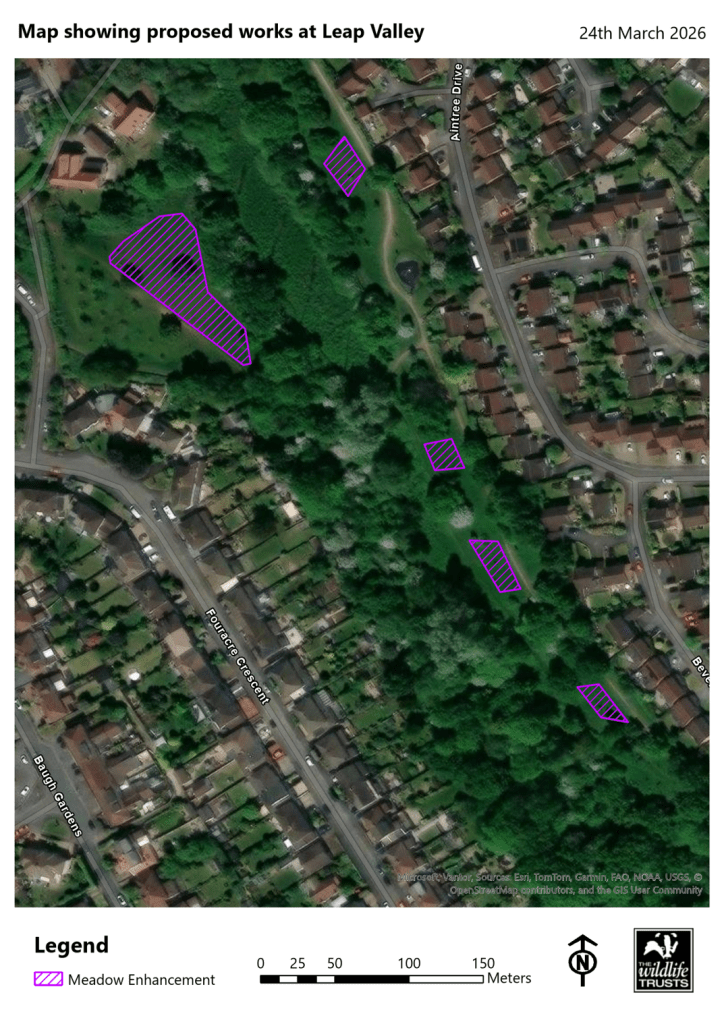
On Tuesday September 8th the Avon Wildlife Trust Pollinator Pathway Team will be in Leap Valley and work will take place in the areas shown on the map to sow wild flower seeds to increase the number of flower species and that way to help the pollinating insects such as bees.
The areas will first be scarified and then seed will be sown and rolled in.
If you would like to volunteer to help with the project by sowing seed after about 1pm please send an e mail message to friendsofleapvalleysecretary@gmail.com
To find out more about the wider project see avonwildlifetrust.org.uk
A New Wooden Bridge
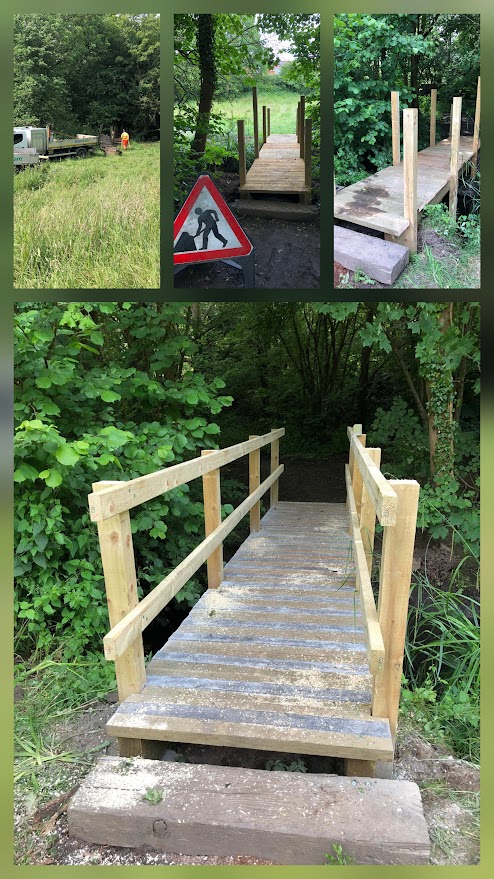
As many of you were aware, the existing wooden bridge had started to suffer. Although it was thought just some parts would be replaced it was not viable. SGC decided a new bridge was needed and three great guys worked over two days to create a replacement. We are very grateful to them and SGC for funding it.
A Replacement Bench by the Stream
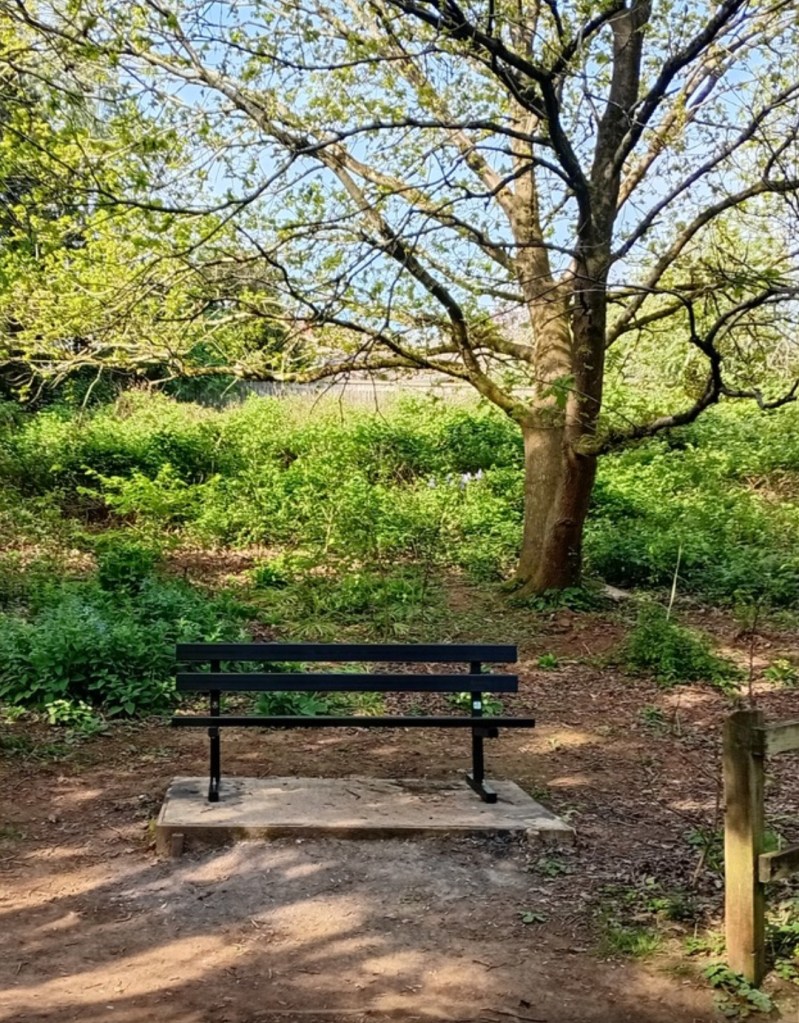
We are very pleased to have the seat near the stone bridge back. It is a favourite place to sit for so many people. This one is made of aluminium so hopefully cannot be set fire to like the previous one. We are very grateful to Dave Buchan, Facilities Manager at Downend and Bromley Heath Parish Council, for fitting it. We are also extremely grateful to the Parish Council and the Heathfest Committee who have each funded half the cost of the new seat.
BRISTOL AVON RIVERS TRUST FIXED PHOTOGRAPHY
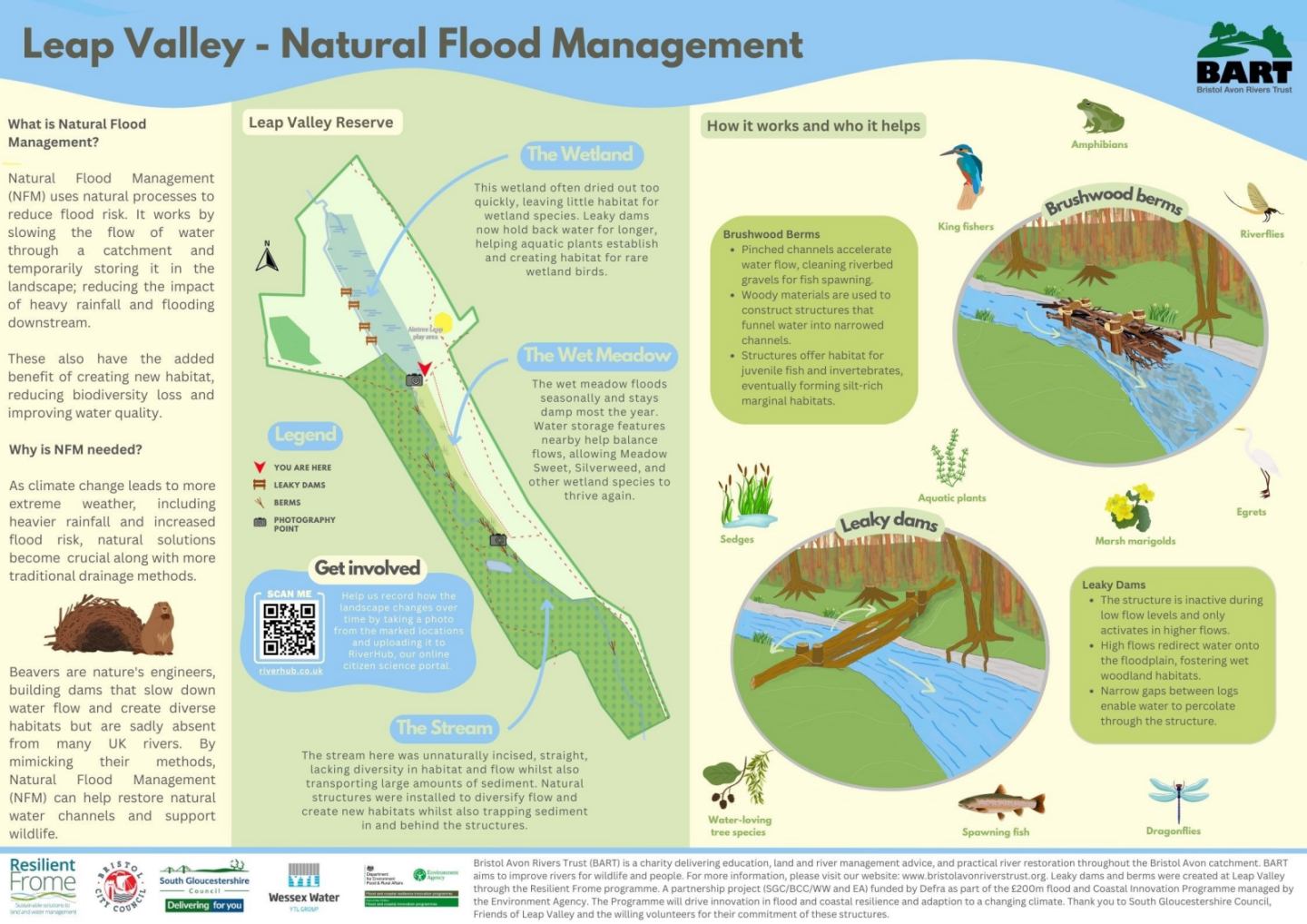
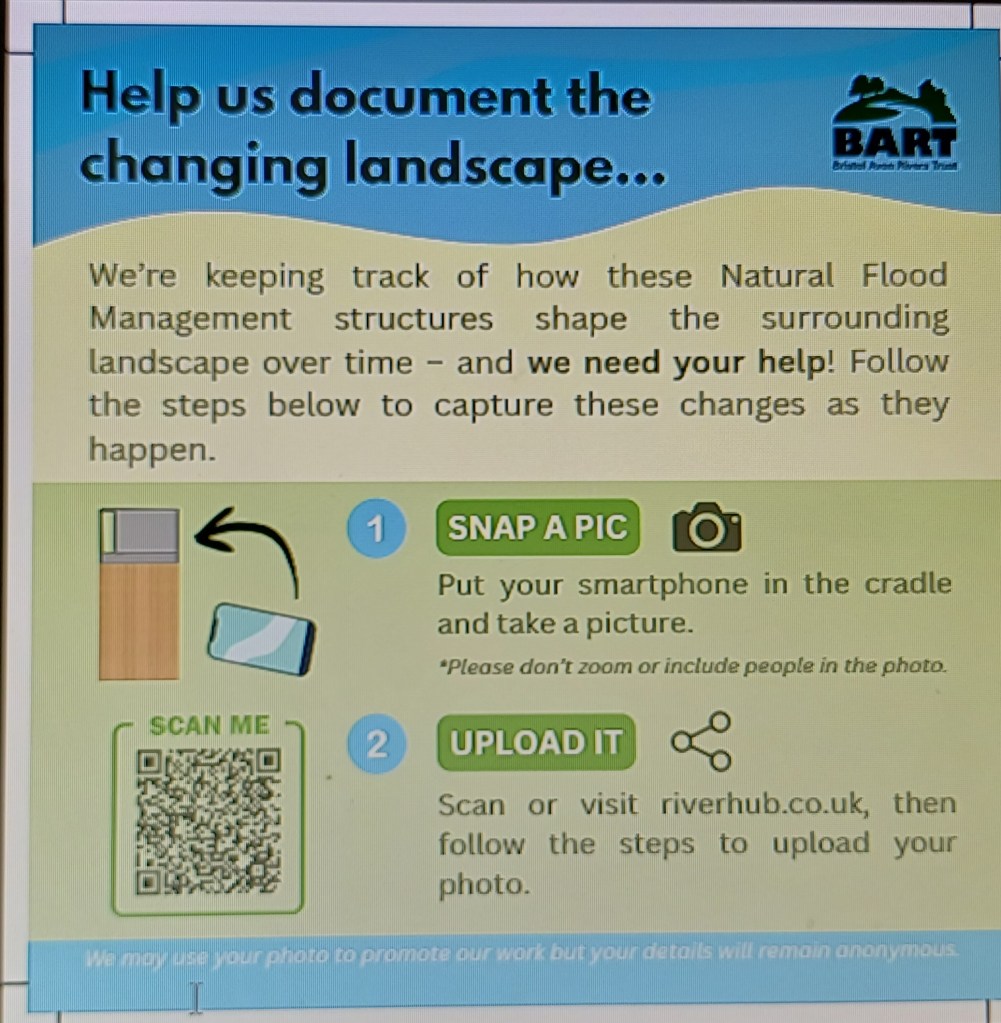
If you have been out in the Valley recently you may have noticed laminated boards at the fence overlooking the Wetland and on the Wooden Bridge. These have been erected by BART to hopefully get the users of the valley to participate in monitoring the effect the Leaky Dams and Berms installed last year are having. Our Wetland is one of the areas chosen by the Resilient Frome Project. The remit is to restore more natural flow patterns in heavily modified urban tributaries and implement nature-based flood management solutions across North Bristol.
I encourage you to take part. Put your camera into the metal fixed point alongside the poster. Take your photo then move your camera to the QR code on the smaller info board. You will be able to upload your photo there. The information will be linked to the RiverHub dashboard.
Wanton Vandalism
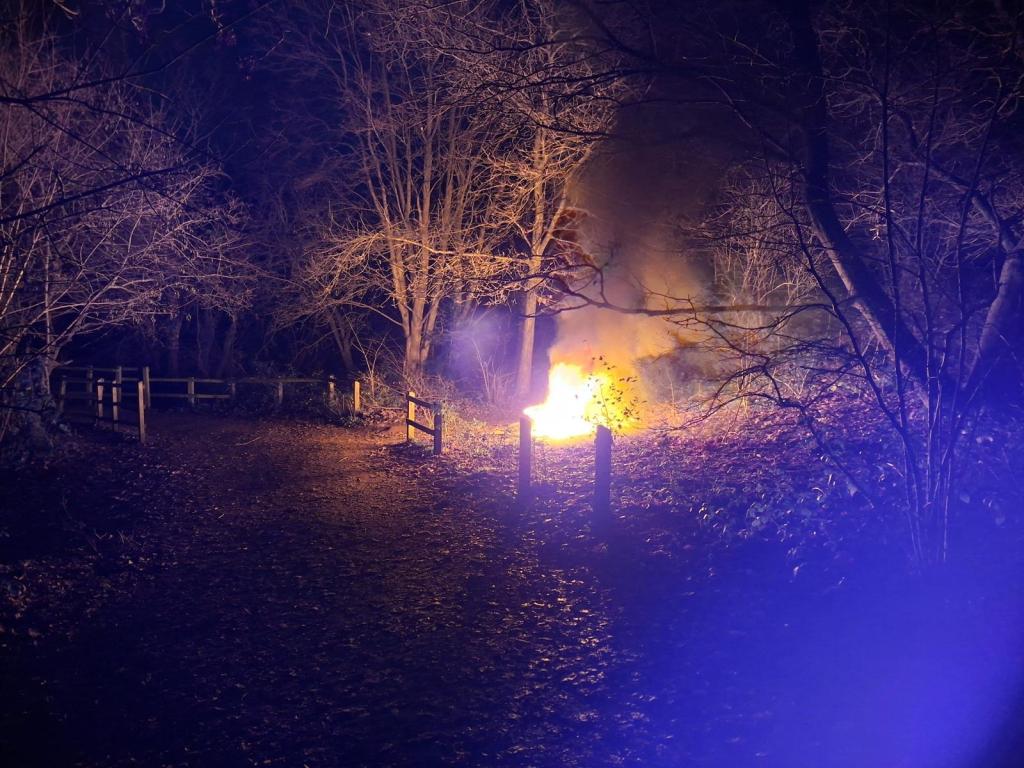
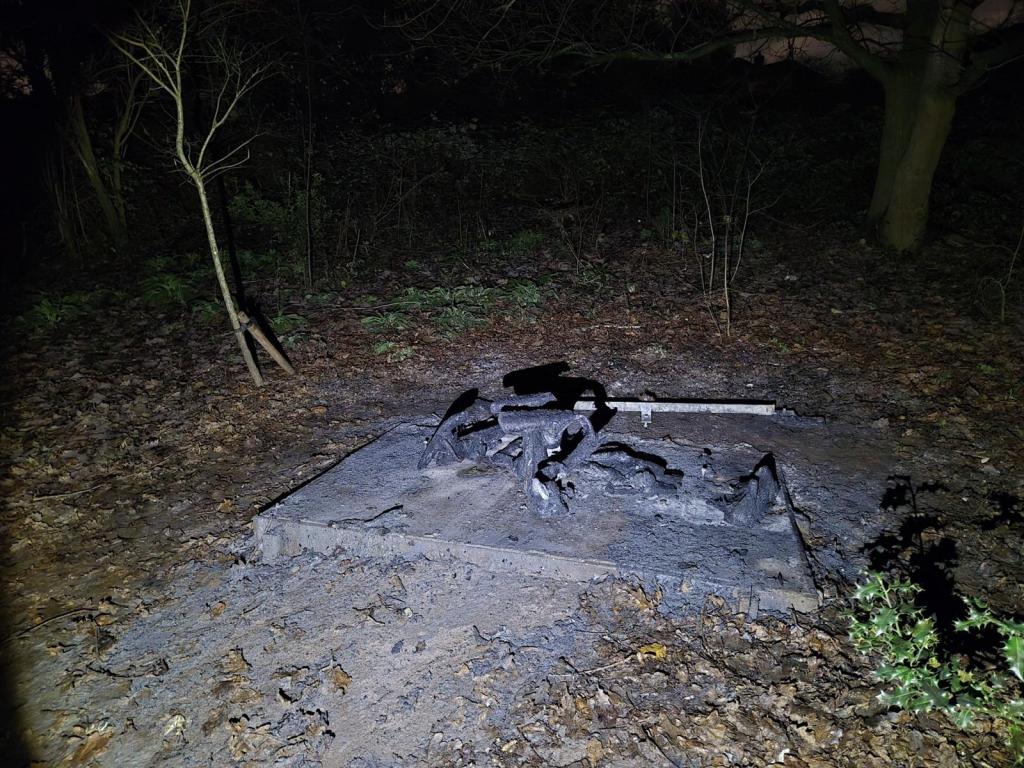
I very sadly have to report that on Saturday the 20th of December, around 18.30, some very selfish individuals destroyed the bench we installed by the stone bridge. It was used and loved by young and the elderly as a place to rest and have some quality time. One cant imagine why anyone would want to do that. It had taken a good deal of effort and the benevolence of the Downend Round Table to help us put this bench in place only last year.
This years Bird Box Review
Another successful year.
Minutes from the latest meeting of the Group
Higher water in the stream around The Stone Bridge

Several residents have shown concern about a different level of water in the stream than they are used to seeing, especially around the stone bridge and are afraid the stream is blocked.
The Leaky Dams to the North of the stone bridge are designed to slow the flow of the stream, especially after heavy rain, to allow more water to collect and seep into the wetland. This means that the wetland area will not dry out as much as it did, which will help to improve marshy habitat for plants like the marsh marigold and willowherb. Dragonflies, damselflies and moths will benefit. Some of the birds that used to feed here like the snipe and water rail may return.
This is all part of the Bristol Avon Rivers Trust project relating to the Avon Flood Management Plan, to not only improve the wetland but to use it to help hold flood water back in areas around the county to prevent flooding downstream and into the city.
Please rest assured that this is being monitored by BARTS and The Friends of Leap Valley. It may look like the stream is blocked but at the forth Leaky Dam the water is flowing well.


You must be logged in to post a comment.